Write down a normal week
List the activities you already do and the ones you realistically want to bring home. Note whether two people will train together, whether a coach will visit and what you enjoy using. Equipment chosen for an imagined routine can become an obstacle in a room that should be inviting.
Rank the activities before ranking machines. A compact collection that supports the sessions you value may serve you better than a miniature copy of a commercial gym.
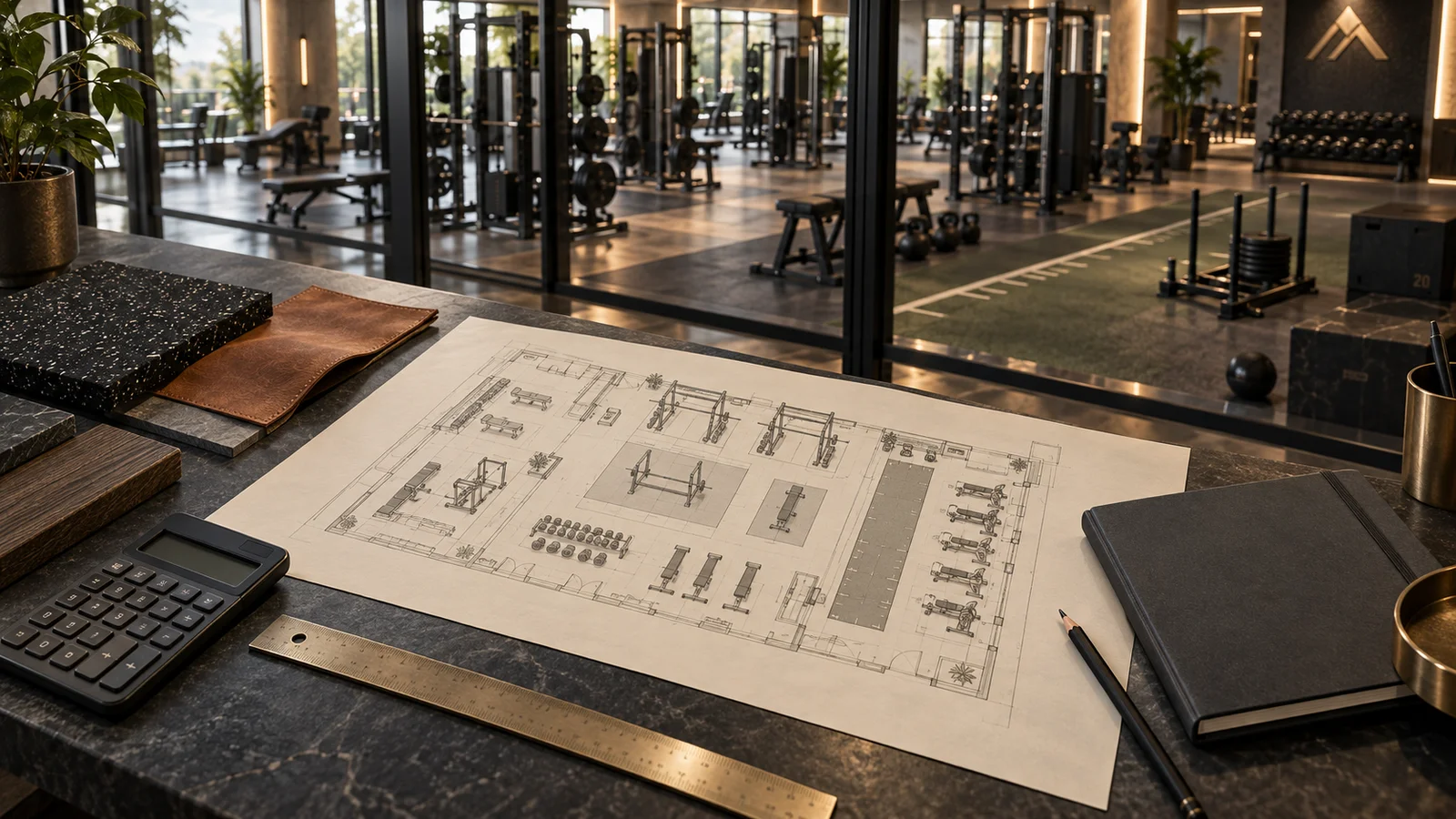
Measure the room and the route into it
Record ceiling height, door openings, stairs, turning points, windows and existing services. Ask for assembled dimensions, packed dimensions and delivery arrangements for each large item. A machine fitting on the plan does not establish that it can reach the room.
Ask the relevant building professional to assess structural loading, vibration and any electrical changes. Flooring and acoustic treatment should be chosen with the room and neighbouring spaces in mind.
Choose a core, then add specialist pieces
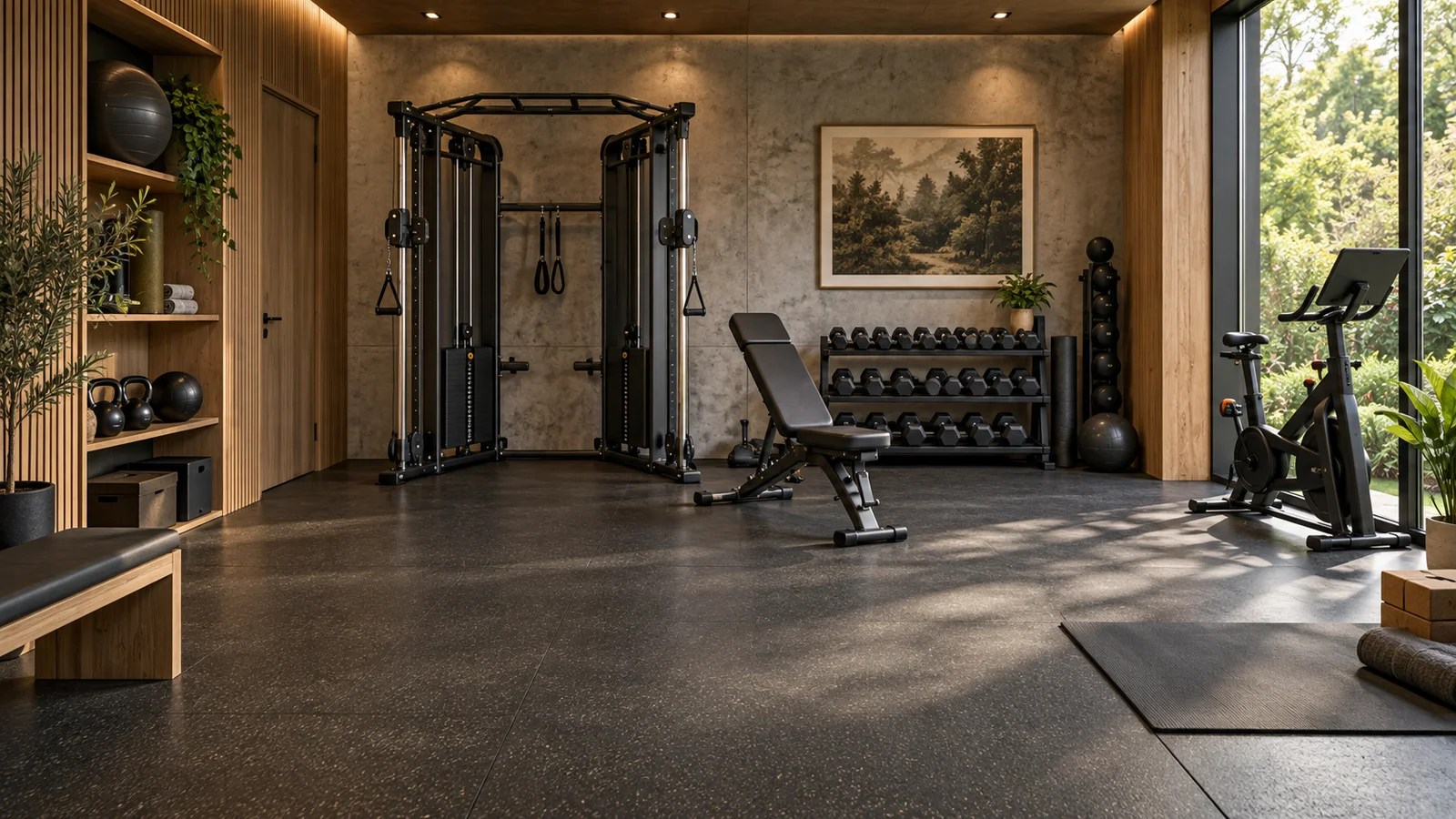
A bench, free weights, a cable station or a rack can each support different routines; choose the combination that fits your brief and experience. Avoid assuming one configuration suits every household. Life Fitness’s home-gym planning guidance likewise treats available space and exercise preferences as starting points.
If you want cardio, choose a mode you expect to use regularly and check its operating clearance, ceiling needs and power requirements. Include accessory storage from the start rather than filling the remaining gaps later.
Make everyday use easy
Consider where you put a phone, towel and water, how you adjust the equipment, and how the room is cleaned. Leave a genuinely usable open area if your routine includes floor work. Lighting, ventilation and sightlines deserve attention alongside the equipment.
Check the supplier’s warranty and service terms for the intended residential installation. Confirm who assembles, positions and demonstrates the equipment, and keep the manuals and model references together.
Prepare a home gym brief
Send room measurements, photographs, the delivery route and a description of a typical session. GYMTECTA can help turn those details into an equipment shortlist and a phased plan.
- Users and preferred training routine
- Measured room and access route
- Core equipment and storage
- Building, electrical and acoustic checks
- Budget and installation scope
Further reading: Life Fitness: home gym planning ↗