Build an opening-cost schedule
List equipment, accessories, delivery, assembly, fit-out, professional services and other project-specific opening items separately. Mark whether each amount is quoted, estimated or still unknown, and whether taxes or import-related costs are included. Confirm local treatment with the relevant adviser.
Add payment dates as well as totals. Equipment deposits, building works and final delivery payments can fall in different months. A project can appear affordable in total while creating a difficult cash requirement before opening.
Separate recurring operating costs
Create a monthly schedule for rent, staffing, utilities, software, cleaning, marketing, maintenance and other costs relevant to your operating model. Distinguish committed costs from those that change with activity.
Ask suppliers about consumables, parts and service arrangements. Include a reasoned allowance for replacement and downtime instead of assuming that a new equipment purchase removes every operating risk. Record the basis of each allowance so it can be revised.
Model contribution before calling it profit
For a simple single-price illustration, break-even volume equals fixed costs divided by price less variable cost per unit. This is the basic relationship described by the U.S. Small Business Administration. It is a planning tool, not a forecast of customer demand.
A gym usually needs more detail: membership discounts, pauses, different packages and ancillary activities can change the average contribution. Define exactly which costs are included in any margin. Operating surplus before financing, tax and depreciation is not the same as net profit or cash available to withdraw.
Test the assumptions that matter
Build a base scenario and a slower-opening scenario using your own supported inputs. Change the membership ramp, average revenue, staffing and opening date to see which assumptions place pressure on cash. Keep an explicit contingency rather than hiding uncertainty inside every number.
Separate equipment purchases that support the opening proposition from additions that can wait. A phased order should still form a coherent training floor; leaving essential activities unsupported can undermine the plan.
Bring the plan into one discussion
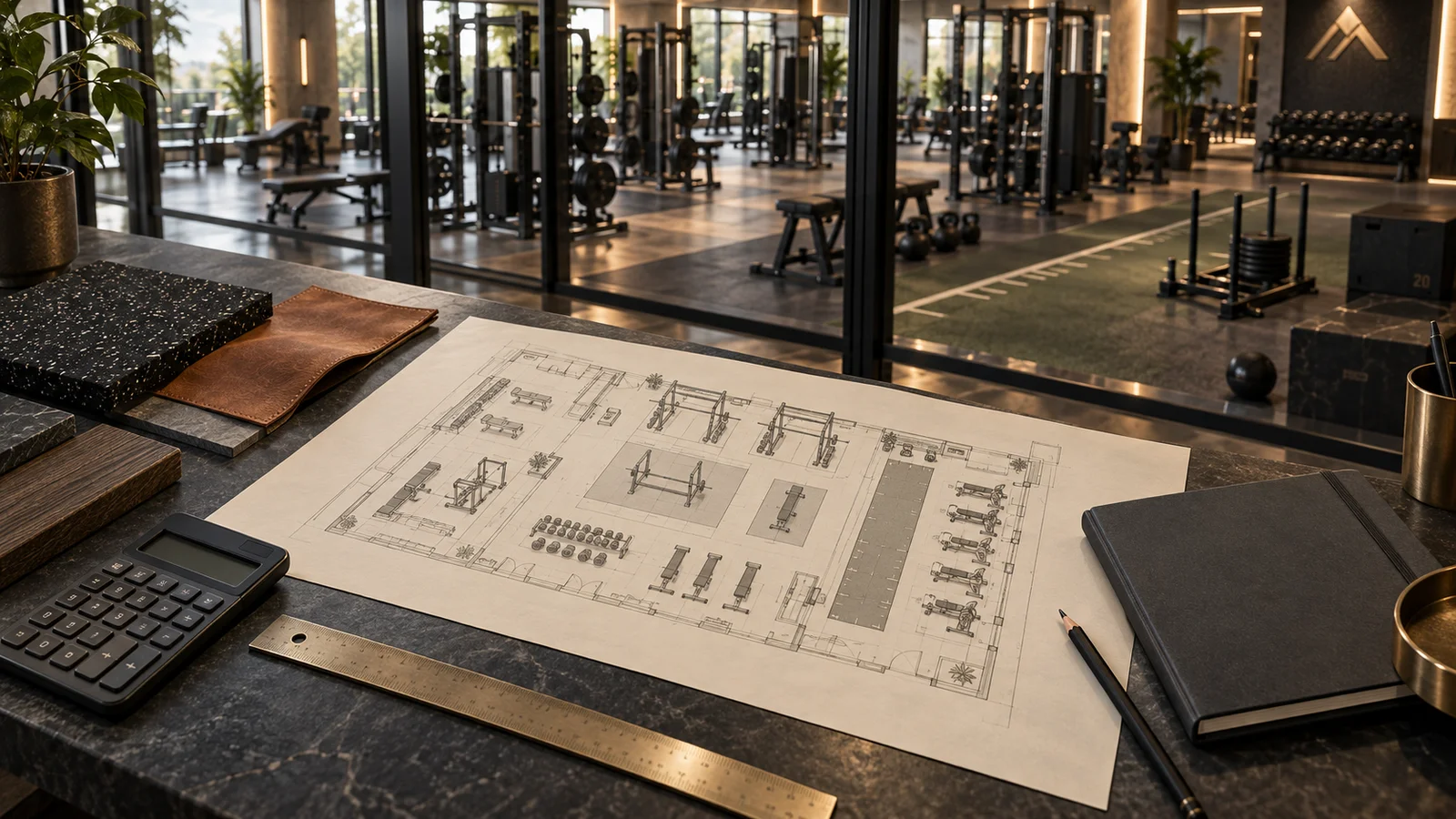
GYMTECTA consulting connects the equipment list, space plan and business assumptions. Bring supplier proposals, premises costs, your intended pricing and opening timeline. We can help structure the model and compare scenarios; results depend on the inputs and actual operations.
- Opening costs and payment dates
- Monthly fixed and variable costs
- Revenue and membership assumptions
- Margin definition and cash-flow timing
- Downside scenario and phased investment
Further reading: U.S. SBA: business planning and break-even basics ↗